
I was a Soldier for 20 years. Then an executive order decided people like me were no longer fit to wear the uniform, and they sent me home. For a while I pretended I still had a schedule: workouts every morning, blocks of time for résumé writing, even lunch breaks. I kept myself ready, just in case. In case there was still a way back.
There wasn’t.
My mental and physical health took a nosedive. The job applications went unanswered. I was still technically in the Army for another six months, a kind of purgatory, waiting to be formally exiled from the only life I’d ever known.
I don’t remember much of those months. I played a lot of video games. One that stuck with me was Hideo Kojima’s Death Stranding.
The world of the game is a post-apocalyptic America, blasted and desolate– all mist over grey mountains, a constant rain that rusts and ages everything it touches, a horizon that feels genuinely infinite. You play as a courier, essentially DoorDashing your way across the wasteland. You almost never see another human being in person; everyone you interact with is a face on a screen, talking to you from inside their fortified shelter as you ferry cargo between them.
Kojima is not, as anyone who has played his games will tell you, a subtle man. The whole plot is about rebuilding a network of connections across a broken country. And every time you bring a new survivor into the network, the same thing happens: their image, which had been pixelated and compressed, resolves. They go from a fuzzy reproduction of a person to a fully realized human being standing in front of you.
Like I said, it’s not subtle.
The first time I saw the scope of the game's world, it wasn’t the scale that took my breath away. It was the emptiness. You crest a hill and suddenly there’s miles and miles of jagged, hostile terrain laid out in front of you. And on the horizon, a distant concrete building, the only smooth lines visible. You point yourself toward it because there’s nowhere else to go.
The art wasn’t separate from the dying. It was a refusal to go quietly; a conscious decision to leave something behind for those of us who would come next.
I recognized that landscape. Everything I knew was gone. I was heading into a world I had no map for, haunted by things I couldn’t see and couldn’t fight. The game calls the monsters that stalk you across the world BTs, or “Beached Things,” creatures that sort of exist at the boundary between the living and the dead.
I didn’t have a catchy name for what was haunting me.
The world of Death Stranding is empty because of a specific catastrophe, a single apocalyptic event that severed every connection at once. Mine had gone quiet more slowly. I was looking for maps of what happens when a world falls apart, other records of people trying to hold on. I found myself reading accounts of the AIDS crisis: journals, letters, and poems people wrote while an entire generation of queer folks were being destroyed and the rest of the world looked away.
In so many of those stories, there’s a sense of urgency about the act of writing it down. The insistence on making something that insisted “we are here, we are real, and we are being lost.” The art wasn’t separate from the dying. It was a refusal to go quietly; a conscious decision to leave something behind for those of us who would come next.
I think about that when I scroll through the contacts on my phone and count the ones I haven’t heard from in months. The deactivated social media accounts. People I used to talk to every day. What we had in common, mostly, was being queer and being in the military– two things that have become mutually exclusive, and dangerous to be openly. I don’t know if they’re alive. I don’t know if they’re safe. I hope they’re just quiet, just careful, just waiting for something to shift. But people don’t announce they’re going into hiding. They just go, and the world gets a little emptier.
The game understood that too. Out in Kojima’s wasteland, that emptiness fills up with other people’s traces.
For thirty seconds while the next person reacted to what I read, I wasn’t a résumé, or a liability, or an administrative problem. I was a person who had made something real.
A unique thing about Death Stranding is that even though you never see other players, you’re never the only person playing. As other couriers move through the same wasteland in their own games, the infrastructure they build appears in yours. A bridge across a canyon, a safe house at the top of a pass, a rope snaking up a cliff face. You never see these people. You’ll never meet them. The only way to acknowledge what they’ve done is to leave a thumbs up on the thing they built, which in their game translates into resources they can use to build more.
Everything you build in the game, you are building for strangers. Strangers are building for you. You will never know each other’s names, but you’ll cross their bridges, and they will cross yours. And the rain comes, and the infrastructure deteriorates. The game’s mechanics will eventually reclaim it. That’s fine. The bridge existed when someone needed to cross.
During those six months, I started going to a weekly poetry group run by Mission Belonging. Every Friday, Seema handed me a writing prompt and twenty or thirty minutes to build something. I’d write, and then I’d read what I’d written to a Zoom call full of people, all of us rendered low-res in our little boxes on the screen. For thirty seconds while the next person reacted to what I read, I wasn’t a résumé, or a liability, or an administrative problem. I was a person who had made something real.
That’s a bridge. Small, maybe. But I’ve crossed a lot of gaps on small bridges.
We make art because the landscape is broken and empty and full of monsters, and we are crossing it. We build things that make it traversable.
Death Stranding is a great piece of media, but it didn’t save my life. I finished the game and I was still in the same place, still exiled, still broken. But I understood something I hadn't yet had words for.
We make art because the landscape is broken and empty and full of monsters, and we are crossing it. We build things that make it traversable. That’s not separate from survival. Sometimes the only reason you make it across is because of what you were able to build.
Somewhere out there, someone else is crossing it too. They’ll find what you built. They won’t know your name, but the bridge will tell them they aren’t alone.
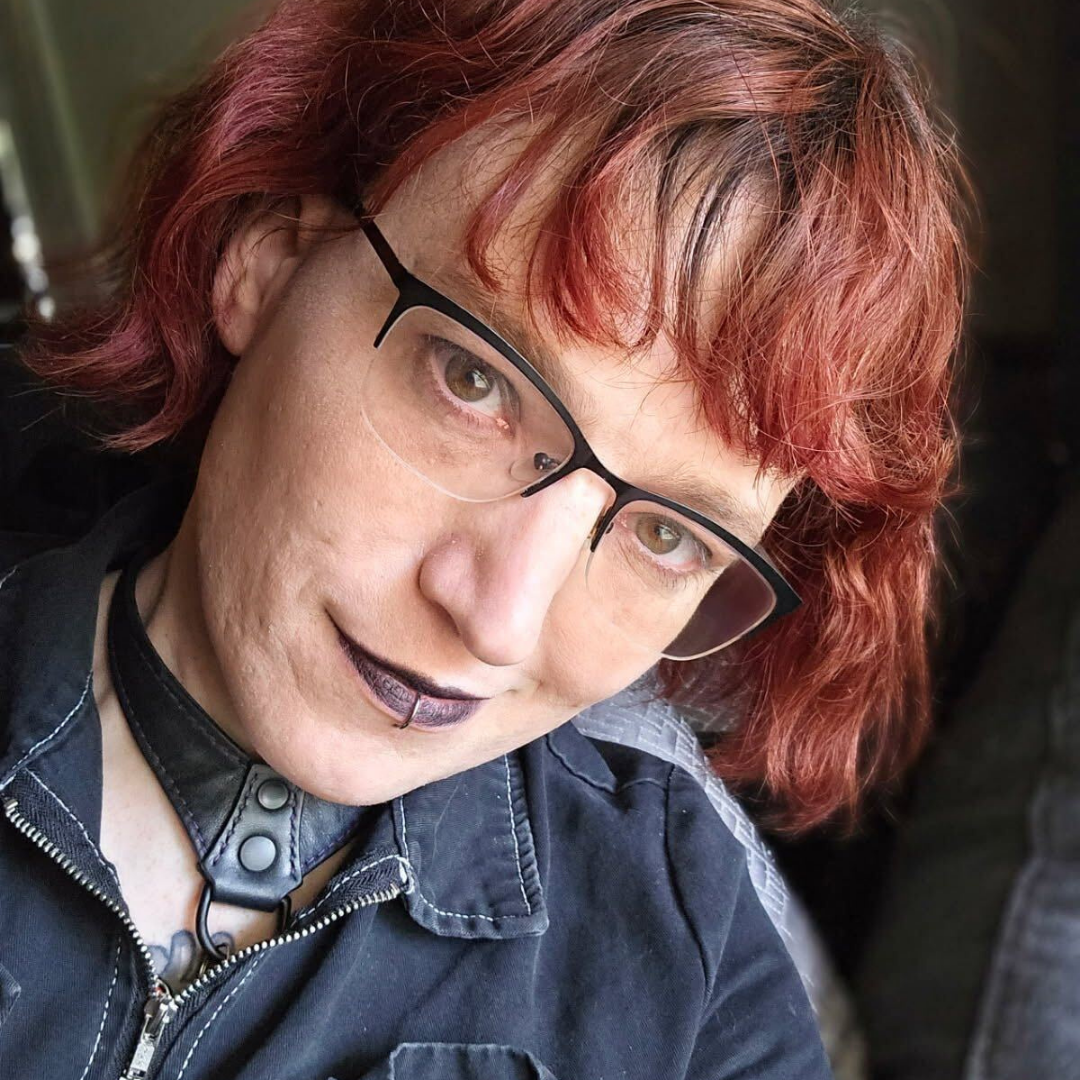
Cathrine Schmid is a transgender veteran who served twenty years in the U.S. Army before being forced into retirement in 2025 under coercive policy rather than her own choosing. Now in Baltimore MD, her writing moves through institutional betrayal, queer identity, and the cost of keeping faith with systems that do not keep faith with you.
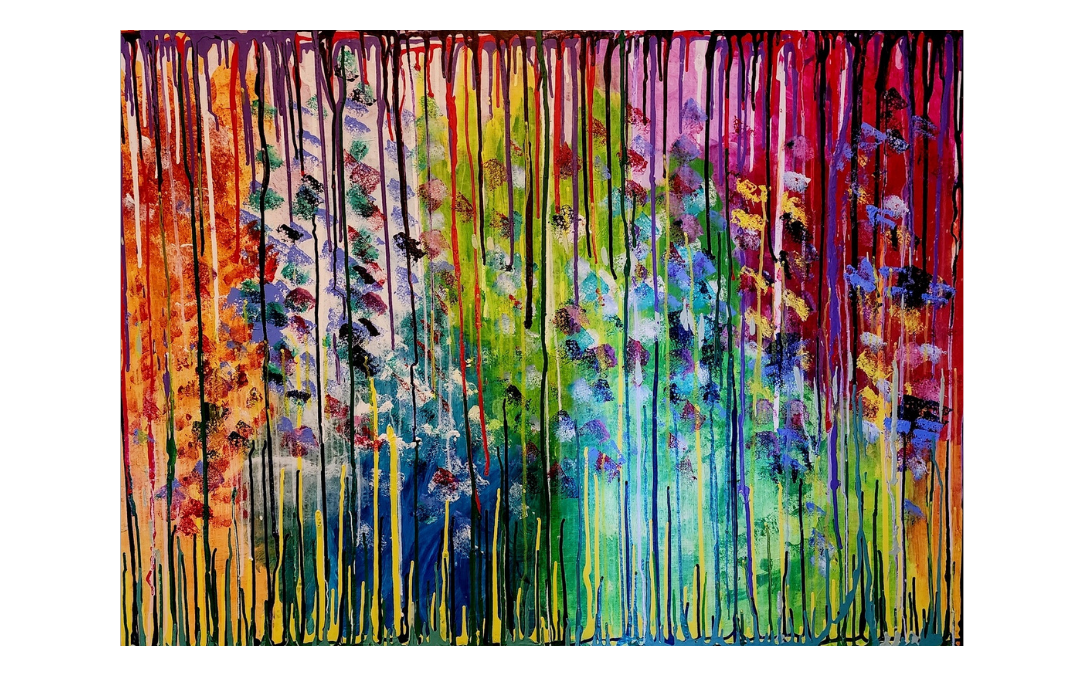
Artwork: Briarwood Bohemian, Forest Trees
Subscribe to our newsletter for early access to Art Saves Lives Essays!
Art Saves Lives by Community Building Art Works is a series of essays where contemporary authors, poets, and artists reflect on the sacred act of art making and allow readers to feel seen and safe to reach further inside of themselves in their own art making practice. To receive these essays in your email before they are available to the wider public, sign up for our newsletter, here.
